

Dr. Richard I. Horowitz MD, PLLC Consulting Services

Dr. Richard I. Horowitz
Due to the extremely high demand for Dr H's consultation service, he is not taking any new patients at this point in time. Any physicians with questions about complex cases can reach Dr H at medical@hvhac.com
About the Consultation
Have your physician schedule a personalized consultation with Dr. Richard Horowitz—renowned physician, researcher, and expert in complex chronic illness. Consultations are available for one or more hours at an hourly rate and are designed to provide in-depth guidance on topics such as tick-borne diseases (Lyme, Babesia, Bartonella, and more), chronic fatigue, immune dysfunction, detoxification, and integrative treatment approaches. These sessions are advisory in nature and meant to offer expert insight and direction—you must have a licensed healthcare provider to implement any recommendations discussed. This consultation provides your healthcare provider direct access to Dr. Horowitz’s decades of experience in managing complex, chronic illness.
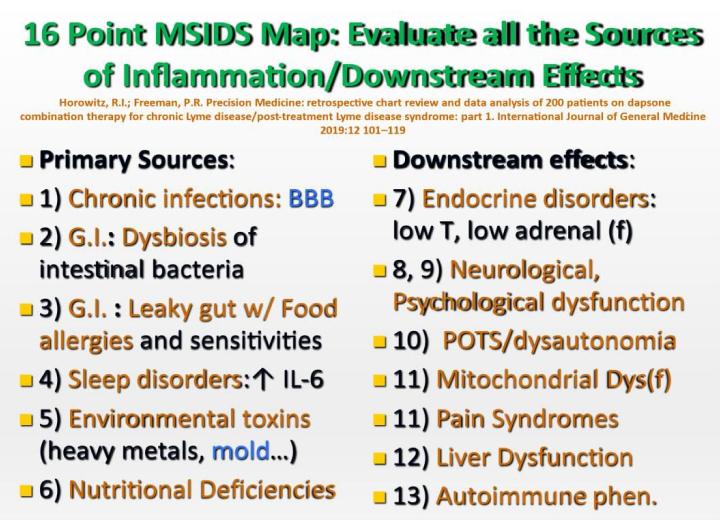
The 16 Point MSIDS Model
The 16 point model that I have developed over decades of scientific research and clinical practice, called MSIDS (Multiple Systemic Infectious Disease Syndrome) combines the best of classical and integrative medicine and uses a multipronged approach to determine why you are sick and remain ill. This model breaks down each patient’s symptom, creating a differential diagnosis, looking for where the multiple sources of inflammation may be coming from that underlie your illness. You can see a brief overview of the MSIDS Model in the chart below. The model was published in detail in both of my best-selling books, Why Can’t I Get Better? Solving the Mystery of Lyme and Chronic Disease (New York Times Bestseller 2013, St. Martin’s Press), ‘How Can I Get Better? An Action Plan for Treating Resistant Lyme and Chronic Disease (National bestseller 2017, St Martin’s Press), as well as in the journal Healthcare in 2018. You can access this article for free here: https://www.ncbi.nlm.nih.gov/pubmed/30400667
The majority of chronically ill patients that I have helped have gotten better and in many cases gone into full remission. Many who had failed traditional approaches (including my wife who is now 7 years in full remission) usually either did not get the right diagnoses and/or did not receive comprehensive treatment of all of the underlying sources of inflammation. As you see in the chart, these sources are infections (bacterial, viral, parasitic and fungal), environmental toxins (including mold, heavy metals, and environmental disrupting chemicals), gastrointestinal/microbiome imbalances, nutritional deficiencies, sleep disorders, hormonal/mitochondrial dysfunction, immune/autoimmune phenomenon, liver/metabolic abnormalities, deconditioning, autonomic nervous system dysfunction and/or neuropsychiatric issues. In many cases, all these factors were underlying their illness. It was like going to a doctor with 16 nails in your foot telling the doctor that you have foot pain and the doctor only found one nail and pulled it out telling you to come back one month later letting him/her know how you were feeling. Obviously, that approach will always be insufficient. Full healing when possible, requires getting to all the underlying sources of where the inflammation is coming from. That is why the 16 point MSIDS model has been so effective.
The Treatment of Chronic Lyme and Associated Tick-borne Disorders
In the case of Lyme and associated tickborne disorders, by following the medical research coming out of major universities like Johns Hopkins, Stanford, the University of New Haven and Northeastern University, I developed a novel treatment for Lyme and associated diseases which has been highly effective. This treatment protocol is called dapsone combination therapy. It is a 9 week oral, generic antibiotic protocol. It can require several two week antibiotic pulses later in the treatment if Bartonella is present and active, especially if mold toxins or immune deficiency are overlapping inflammatory factors. The success of dapsone combination therapy is based on the finding that Borrelia burgdorferi, the agent of Lyme disease, is what is called a “biofilm/persister bacteria” and resists standard treatments unless specific biofilm/persister drug regimens are used to eliminate the infection. The same situation exists for Bartonella. Please see the 2 documentaries listed below which were filmed when I was co-host of the Doctor Talks Healing Lyme Summit in 2024 and 2025, where 27 patients describe their success using this protocol:
You can also hear from 2 other physicians who have used this approach, describing the success of dapsone Combination Therapy in the Treatment of Chronic Lyme/PTLDs:
Passcode: &0yqten0
We have 10 articles published in the peer review medical literature supporting this approach. They are listed below, and you can simply click on any of the links and review the articles and protocols with your healthcare provider.
10 Dapsone Articles on The Effective Treatment of Chronic LD & Associated Co-infections Including Bartonella: As of May 11, 2024
- Combining Double-Dose and High-Dose Pulsed Dapsone Combination Therapy for Chronic Lyme Disease/Post-Treatment Lyme Disease Syndrome and Co-Infections, Including Bartonella.
- Comparison of the Efficacy of Longer versus Shorter Pulsed High Dose Dapsone Combination Therapy in the Treatment of Chronic Lyme Disease/Post Treatment Lyme Disease Syndrome with Bartonellosis and Associated Coinfections.
- Efficacy of Short-Term High Dose Pulsed Dapsone Combination Therapy in the Treatment of Chronic Lyme Disease/Post-Treatment Lyme Disease Syndrome (PTLDS) and Associated Co-Infections
- Efficacy of Double-Dose Dapsone Combination Therapy in the Treatment of Chronic Lyme Disease/Post-Treatment Lyme Disease Syndrome (PTLDS) and Associated Co-infections.
- Effect of dapsone alone and in combination with intracellular antibiotics against the biofilm form of B. burgdorferi.
- Precision Medicine: retrospective chart review and data analysis of 200 patients on dapsone combination therapy for chronic Lyme disease/post-treatment Lyme disease syndrome: part 1. International Journal of General Medicine
- Precision Medicine: The Role of the MSIDS Model in Defining, Diagnosing, and Treating Chronic Lyme Disease/Post Treatment Lyme Disease Syndrome and Other Chronic Illness
- Are Mycobacterium Drugs Effective for Treatment Resistant Lyme Disease, Tick-Borne Co-Infections, and Autoimmune Disease?
- The Use of Dapsone as a Novel “Persister” Drug in the Treatment of Chronic Lyme Disease/Post Treatment Lyme Disease Syndrome
- Superior efficacy of combination antibiotic therapy versus monotherapy in a mouse model of Lyme disease
The full dapsone protocol is published in the journal Microorganisms in 2023, and if your doctor wants to try the protocol, the full explanation can be found there. You do not need to access the consultation model in that case! You can also find more information on this protocol in my Medical Detective Substacks, which are free to access:

Bartonella:
Bartonella: The Second “Great Imitator” Underlying Many Chronic Illnesses – Part 1 of 5
Effective Treatments for Bartonella Infections – Part 3 of 5
Treating Bartonella: Double Dose Dapsone Combination Therapy (DDDCT) – Part 4 of 5
Treating Bartonella: 2-Week Pulses of Antibiotics for Chronic Bartonellosis – Part 5 of 5

Order Now
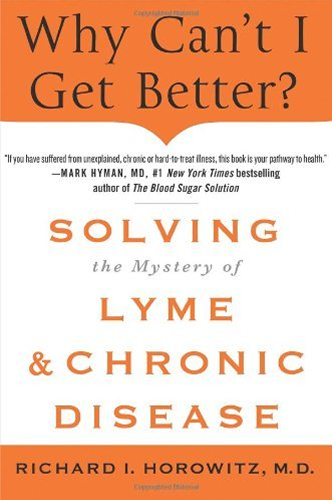
Please click on the links below to pre-order the book, and feel free to forward this to your friends and family that may be suffering with Lyme and associated tick-borne diseases.
now available at:


